
tick, tick...BOOM!*

“Here, time is to be spent, like money; time is to be killed, time is to be forgotten. Everything is a race against time. Trying to beat it is the pressure at your throat.” —Tina Brown, The Vanity Fair Diaries—1983 - 1992
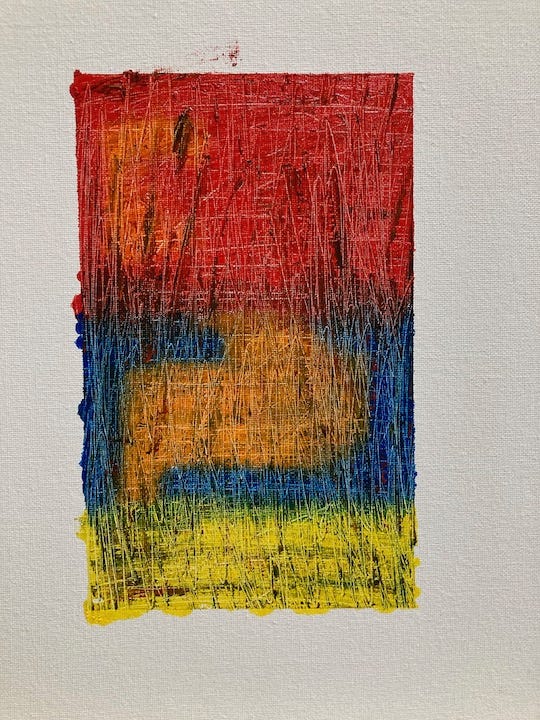
Whenever I get stuck in the studio, I think, What would Robert Rauschenberg do? I can’t imagine him ever suffering from a creative blockage, but if he did, I can only imagine the uninhibited energy he’d unleash on a piece of art to find a new way to an end.
And when I’m writing, a question I might ask myself is, What would Tina Brown think of this? How might she word this? Her writing and editorial talents are par excellence, her taste is chic and stylish, and her wit is so delightfully cutting but never really that spiteful unless she’s been provoked, then look out. Yes, she’s now part of what’s being referred to as legacy journalism, which is throwing a lot of babies out with the bathwater. But she’s just as smart and talented as she’s ever been and now she’s writing on Substack. I suppose like the rest of us, she’s looking for some safe, sane port in the storm.
At least that’s why I’m here.
And she was one of the few who told Jeffery Epstein to get lost, which makes her doubly, no make that triply, attractive.
The above quote is her observation on how Americans view time.
I’m sorry, I can’t help myself: I get mad crushes on smart women.
On June 11, 2002, just about twenty-four years ago to the date, I was getting laid off from a writing job at a software company in Cambridge, Massachusetts. Kendall Square T stop, if you know what that means. MIT, and the gaggle of tech and bio-tech companies—Google, Microsoft, Meta, Amazon, Apple. Akamai Technologies, HubSpot, CarGurus. Moderna, Biogen—that coalesced around the university into what some people might call “an ecosystem of innovation.”
I guess “some people” would be impressed.
Me? Not so much.
This was long before expressions like “toxic environment” and “abusive bosses” entered our collective lexicon. But if those terms had been available they would have precisely described this place with all the creepy accuracy of a gypsy fortune teller gazing into a crystal ball and telling you how you truly feel about your mother.
And that day, while this khaki-clad, button-down “marketing director” with tufts of black hair growing out of his ears—at least now, I thought, I won’t be forced to stare at that particular grotesquerie any longer—while this no-talent, self-important blowhard if there ever was one droned on and on about how this was as painful for him as it was for me, or some such nonsense, it didn’t really matter because I wasn’t listening.
I saw the door of the cage crack open and I was going to make a break for it. My eyes had drifted over his shoulder and out the window, and I was thinking to myself, What a gorgeous day for a bike ride.
Which is what I did.
And later that day, while pedaling past the estates of bankers and stock brokers, through mottled shade along the back roads of some of the better towns in MetroWest, surrounded by all of this money and me suddenly unemployed, I thought to myself, you’ve always wanted to be on your own.
Funny how whenever I mentioned this desire, people would say, Oh, it takes a special kind of person to make it on their own. Yeah, I know. I’m one of them, so step aside. But back then I didn’t understand as much as I do now how badly most people need the job, the office, the structure at the expense of their own lives and freedom. How quickly they would willingly trade their lives for money.
Take note: I’m still the idealist I was at seventeen. Never changed. Just another Holden Caulfield, nothing more, nothing less. Many, I’m sure, find me disagreeable and a boor; others I’m certain silently admire me. Either way, I don’t care.
BTW, The Catcher In The Rye is one of the greatest anti-war novels written, right up there with Slaughterhouse Five, The Naked And The Dead, and Catch-22.
Even when employed in an office environments where I was content (a rare occasion this) I was always, as they say, entrepreneurial. I still saw it that I was working for myself, and not some corporation.
So on that June day I realized if I didn’t make the leap into freelancing right then (and later I learned there never would have been the perfect time to make the leap) but if I didn’t do it then, I’d regret it later. Later I realized what I was doing was simply exchanging one set of anxieties for another. I went from feeling strangled and trapped in a day job, to worrying about where the work and money was going to come from. And frankly, emotionally, I could handle the latter much better than I could the former.
And that day I made one rule and only one rule for myself: I’d only work for people who I respected and who I felt were making the world a better place. I still live by that rule today.
During all of my time working in the corporate/business world, I can honestly say I did work with some incredibly smart, talented, interesting people. Actually, a lot. The smart, interesting people far outnumbered the jerks.
But there were enough who didn’t measure up to the same level of talent that I could display, which I found infuriating, who despite their fallibilities they had somehow wormed their way into positions of authority, who as near as I could tell compromised their values so often to the point where they didn’t even know they were doing it anymore.
To this day I can’t understand how people who I saw as bright and talented could suffer these people. They just knuckled under and endured, I guess, and were slowly beaten down.
But for me, I had reached the point where for my own sanity I had to ensure they weren’t anywhere near my life. So I took charge of that aspect of my life.
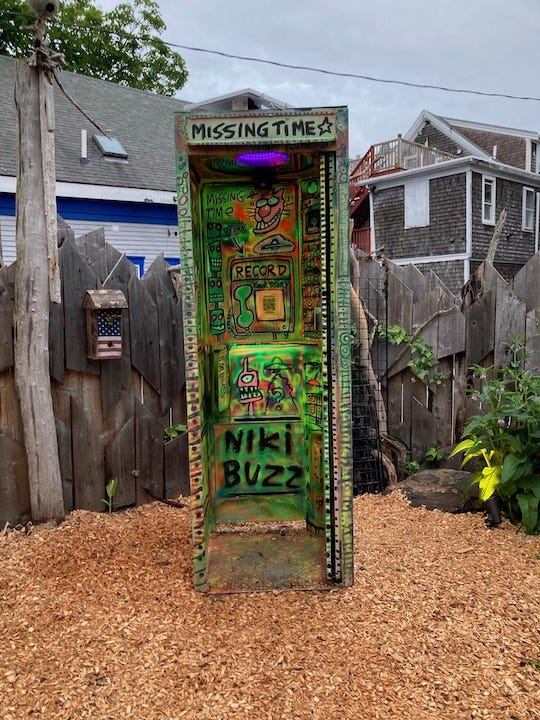
I kept my financial goals reachable; I didn’t want to be shackled to my desk if I wanted to take a couple of days off to go hiking in the mountains. Yes, I had to pay the bills, but I also made sure I had time, and more importantly I gave myself the power to spend the time the way I wanted.
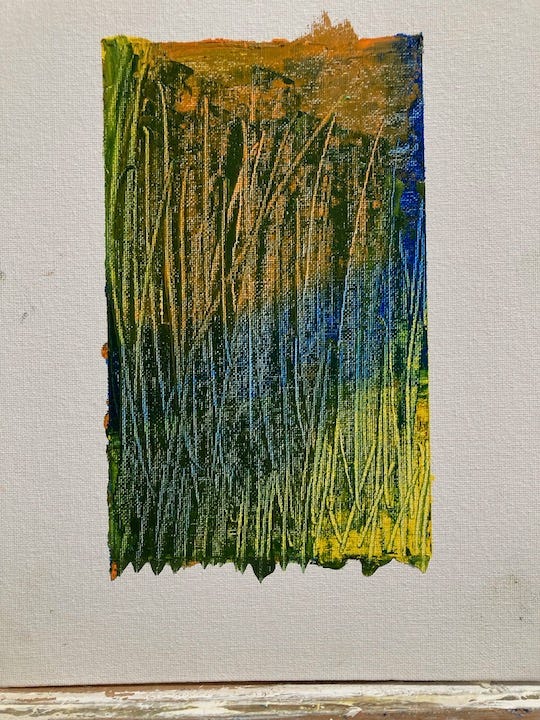
Slowly I could start making art more consistently, and do a bit of traveling. One thing that had always rankled me at an office job was when I’d have to beg a superior to let me take vacation time. You might as well have asked me to raise my hand to go to the bathroom.
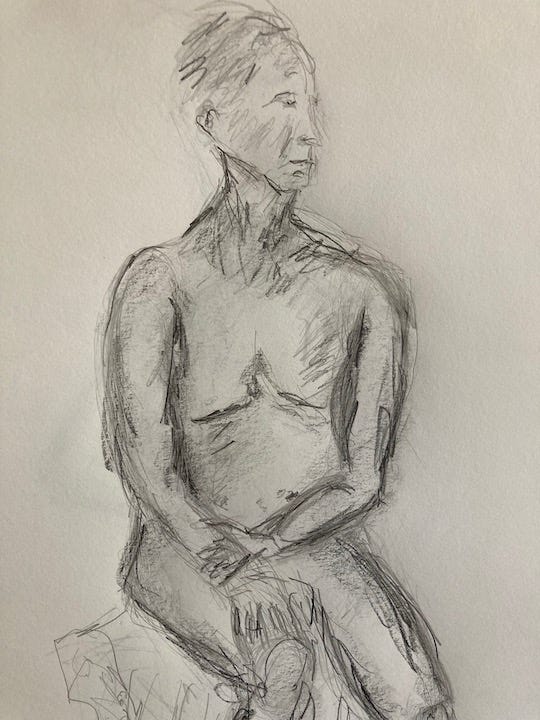
Time.
Of course you’ve heard that platitude that time is money. I grind my teeth just typing those words. If I ever heard someone blithely say, Well, you know: Time really is money, I’d have to remove myself from the room immediately before I went off on them like a bottle rocket.
Time is not money. Time is time, and I figured out long ago that it’s a lot more valuable than money. I can usually do more with time than I can with money. Which is why I crafted my life so I could have as much time as possible. More than most people.
Money was not my goal; time was.
In that regard I feel immensely wealthy. Not monetarily, but with time.


I’m going to stop here. I’m not going to go into what initiated this rant.
Except…
When you have time like I do, people expect you to spend it in ways they’d never spend their own money. You have the time, I hear often enough. I can’t do it; I have a job; but you can, you have the time. A sure sign the person values money over time.
Do you know what a job is? A job is scooping ice cream in the summer. It’s not a career, an avocation, a passion. A job is something to while away your time. Your life.
Never would they understand me if I said, you have more money than I do, you should give me some. But that’s exactly what they’re expecting me to do with my carefully stockpiled cache of time. I can’t help it that you screwed your life down so tightly that you’re not free to do what you want, that you’re shackled to a job and a mortgage. Those are choices people make, and if you haven’t noticed, every day presents us with choices.
Time. Or money. If you had a choice, which would you choose?
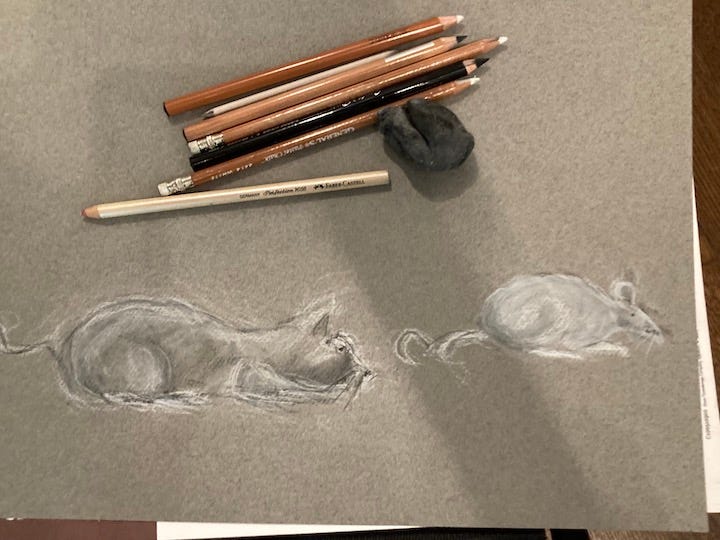
*tick…tick…BOOM! is a musical by Jonathan Larson. The title symbolizes the pressures of racing against the clock and the explosive, mounting anxiety of chasing one's dreams.
I have always assumed that if I had more money, I would have more time. In way it was true. When I had no money, I had to work 3 jobs to keep a roof over my head. Now I make it on one job, but too often, especially lately, I am either too tired to do anything after the job or I am spending the extra(?) time stressing about the job. Working from home helps - at least I don't have to spend as much non-work time preparing for and getting to and from work. I haven't touched an iron since 2019. But I have always said this whole health-insurance-tied-to your-job idea is a trap. They don't want freedom in America. If we were truly free, a lot fewer would show up for work.
Time is money, John, a currency you spend on yourself. The problem I see - okay, have - is short-changing yourself. Be well